

Thailand Bristle Paint Brush: Features, Uses, Bristle Selection and Buying Guide
Aug. 13, 2026Choosing a paint brush is not simply a matter of selecting the correct width. Bristle material, paint pickup, coating release, stiffness, handle construction and intended paint system all affect application efficiency and finish quality.
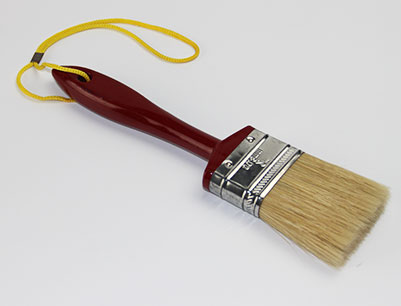
The Thailand Bristle Paint Brush is commonly positioned as an economical natural-bristle or chip-style paint brush for general painting, coating, varnishing and maintenance work. One current manufacturer listing describes its Thailand Bristle Paint Brush as an economy-quality chip brush made with 100% white China bristle, a plain wooden handle and individual packaging.
That detail is important for buyers: the term “Thailand Bristle Paint Brush” should not automatically be interpreted as meaning the bristle itself originates in Thailand. Product naming and actual bristle specifications should always be checked separately when sourcing brushes in bulk.
This guide explains how Thailand Bristle Paint Brushes work, where natural bristle performs best, how they compare with synthetic brushes, and what importers, distributors and professional buyers should evaluate before purchasing.
What Is a Thailand Bristle Paint Brush?
A Thailand Bristle Paint Brush generally refers to a flat, natural-bristle painting brush designed for economical and versatile coating applications.
A typical construction includes:
Natural white bristle
Flat brush head
Metal ferrule
Wooden handle
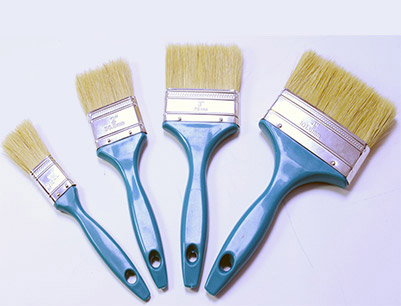
Multiple brush widths
Individual retail or protective packaging
On one commercially available model, the manufacturer identifies the brush as an economy-quality chip brush using 100% white China bristle and a plain wooden handle.
Natural bristle brushes are commonly manufactured from animal hair such as hog or boar bristle. In the paint-brush industry, hog bristle is also commonly referred to as China bristle, and it may be supplied in white, bleached or darker natural grades.
Why Is Natural Bristle Used in Paint Brushes?
The brush filament is the part that actually carries and distributes the coating.
Natural bristle has a different surface structure from smooth synthetic filament. This gives it useful paint-loading and release characteristics, particularly when working with oil-based coatings.
Natural-bristle brushes are traditionally preferred for:
Oil-based paint
Alkyd coatings
Wood stain
Varnish
Shellac
Lacquer
Polyurethane
Some solvent-based finishes
Industry guidance generally favors natural bristle for oil-based paints and varnishes, while synthetic filament is preferred for water-based paints because synthetic fibers do not swell in water in the same way natural hair can.
This makes coating compatibility one of the first questions buyers should ask when selecting a Thailand Bristle Paint Brush.
Key Features of a Thailand Bristle Paint Brush
1. Natural Bristle for Good Paint Pickup
Paint pickup refers to how much coating a brush can carry after dipping.
Natural bristle can retain a relatively large amount of oil-based coating between individual hairs. This reduces the frequency of reloading and can improve efficiency on repetitive painting work.
A good bristle bundle should balance three factors:
pickup + controlled release + finish quality
Holding large quantities of paint is not useful if the brush releases it unevenly.
2. Smooth Coating Release
Natural bristle is popular for finishing applications because it can release oil-based coatings progressively across the surface.
This can help when applying:
Wood varnish
Furniture coatings
Enamel
Oil paint
Protective finishes
Professional brush quality is often assessed partly by paint pickup, steadiness of release, brush marks, drag and precision.
3. Economical Chip-Brush Construction
Some Thailand Bristle Paint Brushes fall into the chip brush category.
Chip brushes are relatively simple flat brushes commonly used for:
General coating
Priming
Touch-up
Adhesives
Stain
Varnish
Cleaning
Maintenance painting
Their straightforward construction makes them especially attractive for users who need large quantities of brushes rather than highly specialized decorating brushes.
4. Wooden Handle
A plain wooden handle is commonly used in economical natural-bristle brushes. The Thailand Bristle Paint Brush currently listed by Cohwa, for example, uses a plain wood handle.
Wooden handles are suitable for both professional and general-purpose brush designs and can also be customized for private-label orders through printing, coating or branding depending on manufacturer capabilities.
5. Flat Brush Profile
Flat brushes are designed to apply coatings efficiently across comparatively broad surfaces.
They are useful for:
Panels
Doors
Furniture
Timber
Metal fabrication
Fences
General maintenance surfaces
A flat profile is also easy for distributors to merchandise because multiple widths can be offered as a coordinated product series.
Thailand Bristle Paint Brush vs. Synthetic Paint Brush
One of the most important purchasing decisions is whether to choose natural or synthetic filament.
| Feature | Thailand/Natural Bristle Brush | Synthetic Paint Brush |
|---|---|---|
| Typical filament | Natural hog/boar bristle | Nylon, polyester or blends |
| Oil-based paint | Excellent choice | Often suitable |
| Varnish and stain | Very suitable | Depends on filament |
| Water-based paint | Usually less suitable | Preferred |
| Water absorption | Higher | Low |
| Paint pickup | Strong with oil coatings | Depends on filament design |
| Finish | Smooth with suitable coatings | Can also provide smooth finish |
| Cleaning | May require solvent | Often easier with water-based paint |
| Typical market | Traditional/professional finishing | Modern general-purpose painting |
Synthetic paint-brush filaments commonly include nylon, polyester or blends. Synthetic filaments are normally preferred for latex and other water-based paints because they maintain their working characteristics better when wet.
Natural bristle therefore remains especially relevant when the intended market uses oil-based paints, varnishes, stains and similar finishes.
Can a Thailand Bristle Paint Brush Be Used With Water-Based Paint?
This requires some care.
One manufacturer's Thailand Bristle Paint Brush page markets the product for oil-based, water-based and latex paints. However, that same manufacturer's general bristle-brush guidance states that natural bristle is ideal for oil-based alkyd paint and recommends avoiding latex water-based paints because natural fibers can absorb water and become limp.
Broader paint-brush guidance likewise generally recommends synthetic brushes for water-based products.
For professional buyers, the practical conclusion is straightforward:
Do not rely only on a statement such as “for all paints.” Ask the supplier to confirm the exact bristle composition and test the brush with the coating used in your target market.
This is particularly important for distributors selling brushes under their own brand.
Best Applications for Thailand Bristle Paint Brushes
Oil-Based Paint
This is one of the strongest applications for natural-bristle brushes.
Natural filament can hold oil-based paint effectively and release it smoothly, making the brush suitable for:
Wooden doors
Trim
Furniture
Cabinets
Metal structures
Decorative timber
Varnish
Varnish application requires controlled coating release.
A suitable natural-bristle brush can help distribute varnish evenly across timber and reduce excessive streaking when correct brushing technique is used.
Common applications include:
Furniture
Doors
Cabinets
Wooden panels
Handrails
Interior woodwork
Wood Stain
Stain often needs to be worked into wood grain rather than simply deposited on the surface.
Natural-bristle brushes are commonly used with oil-based wood stains and protective treatments.
Primer
Economical chip-style brushes are convenient for primer applications where extremely fine decorative finishing is not the main requirement.
They can be used in:
Fabrication shops
Construction
Repair workshops
Woodworking
General maintenance
Adhesives and Resins
Low-cost natural-bristle chip brushes are also commonly purchased for spreading coatings or compounds where the brush may not be reused extensively.
Examples may include:
Adhesives
Epoxy-related work
Fiberglass work
Resin application
General workshop coating
Compatibility should still be confirmed for the exact chemical system being used.
How Bristle Quality Affects Performance
Two brushes may both be marketed as natural-bristle paint brushes but perform very differently.
Professional buyers should evaluate more than the product name.
Bristle Length
Longer bristles usually provide greater flexibility and paint capacity but may offer less control if the bundle is too soft.
Shorter bristles tend to feel firmer.
Bristle Density
Higher filament density can increase coating capacity.
However, simply increasing the quantity of bristle is not enough. The manufacturer must balance:
Density
Brush thickness
Filament stiffness
Paint release
Overall brush weight
Bristle Flagging
The ends of natural bristles may have fine split or flagged tips.
Flagged bristles can help provide more even coating application.
Bristle Retention
A brush that constantly sheds hair into wet paint creates additional finishing work.
Buyers should therefore test whether the ferrule and adhesive system hold the bristle bundle securely.
Bristle Recovery
After the brush is bent against a surface, the filament should recover sufficiently to continue producing controlled strokes.
Poor recovery results in a brush that spreads excessively and becomes difficult to control.
How to Choose the Right Brush Size
Thailand Bristle Paint Brushes can be offered in several widths depending on supplier and target market.
A useful product range might include:
| Brush Size | Typical Use |
|---|---|
| 1 inch | Detail work, narrow surfaces |
| 1.5 inch | Small trim and repair work |
| 2 inch | General painting and varnishing |
| 2.5 inch | Furniture and medium surfaces |
| 3 inch | Doors, timber and general painting |
| 4 inch | Larger panels and broad surfaces |
| 5 inch+ | High-coverage coating applications |
For wholesalers, offering several widths helps cover multiple applications without requiring completely different brush constructions.
Thailand Bristle Paint Brush vs. Premium Professional Brush
An economical bristle brush and a premium decorating brush serve different purchasing requirements.
Economy Bristle Brush
Best suited for:
General maintenance
Short-term jobs
Primer
Stain
Adhesive application
Workshop use
High-volume retail
Price-sensitive markets
Premium Professional Brush
Usually emphasizes:
Higher-grade filament
Better taper
Higher bristle retention
Better ergonomic handle
Improved ferrule construction
More controlled finish
Longer reusable service life
For importers, the correct choice depends heavily on the target customer.
A hardware-store economy range may prioritize competitive cost and packaging.
A professional decorating brand may prioritize finish quality and long brush life.
Important Specifications for Wholesale Buyers
When purchasing a Thailand Bristle Paint Brush in volume, request a complete specification rather than only a photograph and unit price.
Bristle Material
Confirm whether the product uses:
100% natural bristle
White China bristle
Black bristle
Mixed natural bristle
Natural/synthetic blend
The commercially listed Thailand Bristle Paint Brush referenced above specifies 100% white China bristle.
Brush Width
Specify the exact width in:
Inches
Millimeters
This prevents misunderstanding between suppliers and international buyers.
Bristle Length
Bristle length influences both capacity and stiffness.
Brush Thickness
Two 3-inch brushes can contain very different volumes of bristle.
Brush thickness therefore matters when comparing quotations.
Ferrule
Check:
Material
Thickness
Corrosion resistance
Mechanical fastening
Fit to handle
Paint brushes generally use a ferrule to secure the bristle bundle to the handle.
Handle
Evaluate:
Wood species or material
Length
Surface treatment
Shape
Hole design
Logo printing
Packaging
Depending on the distribution channel, buyers may require:
Individual wrapping
Polybags
Paper sleeves
Hang tags
Color boxes
Display cartons
Bulk cartons
The referenced Thailand Bristle Paint Brush is individually wrapped.
How to Test a Thailand Bristle Paint Brush Before Bulk Ordering
A sample evaluation should simulate actual customer use.
Test 1: Bristle Shedding
Pull and flex the bristle bundle before painting.
A small amount of initial loose hair may occur with some natural brushes, but excessive shedding should be investigated.
Test 2: Paint Pickup
Dip the brush into the intended coating and compare how much product it holds against other brush samples.
Test 3: Paint Release
Apply the paint across a test panel.
Check whether paint is released gradually or deposited heavily at the start of each stroke.
Test 4: Brush Marks
Evaluate the finish after drying.
For varnish and furniture applications, visible brush marks may be a critical purchasing criterion.
Test 5: Bristle Recovery
Flex the brush repeatedly and check whether the bundle returns to its original profile.
Test 6: Handle Comfort
A brush may look good in packaging but feel uncomfortable during extended use.
Test 7: Ferrule Security
Check for movement between:
Bristle
Ferrule
Handle
Poor assembly can lead to premature product failure.
OEM and Private Label Thailand Bristle Paint Brushes
Paint brush importers and tool brands often need products that match their own market positioning.
Depending on manufacturing capability, customization can involve:
Brush dimensions
Natural-bristle percentage
Bristle color
Bristle length
Handle shape
Handle finish
Handle printing
Brand logo
Ferrule material
Packaging
Barcode labels
Carton quantities
A distributor targeting professional decorators may request a higher filament fill and upgraded packaging.
A wholesaler targeting construction consumables may prioritize economical construction and bulk carton efficiency.
The correct specification should therefore be developed around the target user and coating application, rather than selecting a brush solely according to price.
Common Purchasing Mistakes
Buying Only by Brush Width
A 3-inch brush from one manufacturer may contain significantly more bristle than another 3-inch brush.
Always compare thickness, bristle length and total fill.
Ignoring Paint Compatibility
Natural bristle and synthetic filament behave differently with different paint systems.
This should be verified before volume purchasing.
Choosing the Cheapest Bristle Grade
Reducing bristle quality may create problems such as:
Excessive shedding
Poor paint capacity
Irregular tips
Weak recovery
Uneven application
A slightly higher brush cost may produce a better overall value if users can work faster and reuse the product.
Ignoring Packaging
For retail buyers, packaging directly affects:
Shelf presentation
Product protection
Barcode management
Brand recognition
Shipping efficiency
Skipping Sample Testing
Photos cannot demonstrate paint pickup, stiffness or shedding.
Samples are essential for professional evaluation.
Frequently Asked Questions
What is a Thailand Bristle Paint Brush?
It is a commercially used product designation for a natural-bristle or chip-style paint brush. At least one current manufacturer sells a product under this name with 100% white China bristle, a wooden handle and individual wrapping.
Does Thailand Bristle mean the bristle comes from Thailand?
Not necessarily. The product designation should not be treated as a statement of bristle origin. For example, one Thailand Bristle Paint Brush specification explicitly identifies the actual filament as white China bristle. Buyers should confirm origin and composition directly with the supplier.
What paint is best for natural bristle brushes?
Natural bristle is particularly well suited to oil-based paint, stain, varnish, shellac and similar finishes. Synthetic filament is normally preferred for water-based and latex coatings.
What is white China bristle?
China bristle is an industry term commonly associated with natural hog bristle used for paint brushes. Hog bristle is stiffer and stronger than many soft natural hairs and may be bleached or supplied in its natural color.
Is natural bristle better than synthetic bristle?
Neither is universally better.
Natural bristle is particularly effective with many oil-based coatings, while synthetic filament is generally better for water-based coatings.
The better choice depends on the paint system, desired finish and working conditions.
What should wholesalers check before ordering?
Buyers should confirm:
Bristle material
Brush size
Bristle length
Fill density
Ferrule material
Handle material
Packaging
MOQ
Branding options
Carton quantity
Production lead time
Sample testing should also be completed before a large order.
Final Thoughts
A Thailand Bristle Paint Brush can be a practical option for distributors, contractors, hardware retailers and industrial users looking for an economical natural-bristle painting tool.
Its real performance, however, depends far more on the underlying construction than on the product name.
When evaluating a brush, focus on:
bristle composition, paint compatibility, bristle density, paint pickup, coating release, shedding resistance, ferrule strength and handle construction.
For oil-based paints, stains and varnishes, natural bristle remains particularly relevant because of its coating-holding and application characteristics. For water-based coatings, synthetic filament is usually the more appropriate choice.
For professional and wholesale buyers, the most reliable approach is therefore to define the intended coating first, request detailed product specifications second, and test actual samples before committing to bulk production.
That process makes it much easier to choose a Thailand Bristle Paint Brush that balances application performance, durability, user experience and purchasing cost.